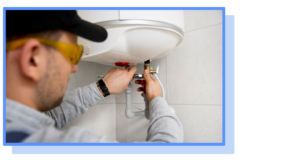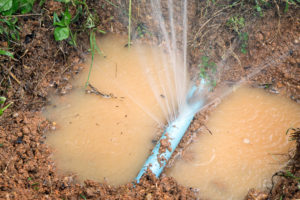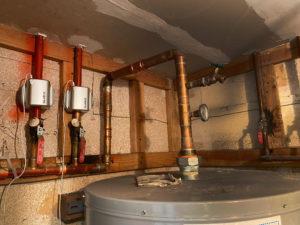



A puddle forming beneath your water heater rarely arrives with a clear explanation. The water could be coming from a loose valve, a corroded fitting, or a failing tank, and the urgency of the situation depends entirely on which is causing it. Water heater leaks account for some of the most expensive household water damage claims, with repair and remediation costs frequently reaching $3,000 to $5,000 or more when the problem goes undetected for even a few days. This guide walks through the most common causes of water heater leaks, the warning signs that often appear before active leaking starts, and practical steps for deciding between repair and replacement. It also covers what you can do to catch future problems early, before they cause damage.
Most water heater failures do not happen without warning. Subtle changes in performance and appearance often precede an active leak by weeks or months, and recognizing these signs early can mean the difference between a minor repair and a flooded utility room.
Unusual sounds are among the earliest indicators. Rumbling, popping, or cracking noises from the tank typically result from sediment that has collected at the bottom and is being superheated during each heating cycle. As layers of mineral deposits thicken, they trap water beneath them, causing small steam eruptions that produce audible pops and knocks. Left unchecked, this overheating weakens the tank bottom over time.
Changes in hot water quality also signal internal problems. Rust-colored or cloudy hot water suggests corrosion inside the tank or deterioration of the anode rod. A metallic taste or smell in hot water (but not cold water) points to the same issue. Reduced hot water supply or inconsistent temperature from a tank that previously performed well often indicates sediment displacing water volume or the heating element struggling to compensate for insulation buildup.
On the outside of the tank, look for visible rust on fittings, valves, or the tank shell itself. Rust stains around pipe connections at the top of the tank may indicate slow seepage that has not yet progressed to dripping. Minor dampness or condensation near the base of the tank is sometimes mistaken for a leak and should be monitored. Condensation is common when cold water enters a tank in a warm, humid environment and typically resolves on its own, but persistent moisture in the same spot warrants closer investigation.
Paying attention to these signals matters because small internal corrosion spots can progress into cracks, and performance drops typically precede full tank failure. Acting during the warning phase can prevent the kind of floor, drywall, and mold damage that transforms a water heater issue into a major restoration project.
Age and Internal Corrosion
Standard tank water heaters have an average lifespan of 8 to 12 years, though well-maintained units can reach 15 to 20 years depending on water quality and usage patterns. Over time, the steel tank corrodes from the inside. Rust buildup weakens the metal, and microscopic cracks eventually form, typically starting at the base where sediment accumulation and heat stress are greatest. Leaks from an age-corroded tank usually appear as steady seepage from the bottom of the unit. Once the tank has cracked due to internal corrosion, the unit cannot be repaired and must be replaced.
Loose or Damaged Drain Valve
The drain valve at the bottom of the tank allows periodic flushing and maintenance draining. Over time, especially after repeated use, the valve seal can loosen, or the valve body itself can crack. Signs include a slow drip from the valve spigot, moisture near the hose connection point, and leaking that worsens when the tank is full, and the water pressure against the valve is highest. In many cases, simply tightening the valve with a wrench resolves the problem. If the valve body is damaged or corroded, a plumber can replace it without replacing the entire water heater.
Faulty Temperature and Pressure (T&P) Relief Valve
The T&P relief valve is a critical safety component that releases water when the tank’s internal temperature or pressure exceeds safe limits. When functioning properly, it prevents tank rupture. When it fails, it can leak continuously or intermittently from the side of the tank, often discharging water through the drain pipe that runs down the side of the unit to floor level. A T&P valve leak can sometimes indicate that the valve itself is faulty and needs replacement. Other times, the valve is operating correctly but responding to actual excess pressure or overheating caused by a separate problem, such as a malfunctioning thermostat or high incoming water pressure. Testing a T&P valve requires caution. Homeowners can briefly lift the test lever to confirm that the valve opens and closes, but a licensed plumber should handle diagnosis and replacement.
Excessive Water Pressure
Household water pressure above 80 PSI puts stress on every component in your plumbing system, including the water heater’s internal seals, fittings, and tank walls. Signs include leaks near pipe connections at the top of the tank, repeated T&P valve discharge, and simultaneous issues at multiple fixtures throughout the home. A simple pressure gauge (under $15 at any hardware store) threads onto any hose bib and gives you an instant reading. If your pressure regularly exceeds 80 PSI, a pressure-reducing valve installed on the main supply line protects the entire system. An expansion tank may also be needed if your home has a closed plumbing system with a backflow preventer or check valve.
Sediment Buildup
In areas with hard water, minerals suspended in the water supply gradually settle to the bottom of the tank. This layer of sediment insulates the tank bottom from the burner or lower heating element, forcing the system to work harder and run longer to heat the water above it. The resulting overheating weakens the tank’s metal, eventually causing cracks. Rumbling or popping noises during heating cycles are the most recognizable sign of heavy sediment accumulation. Annual tank flushing removes sediment before it causes damage. Draining 2 to 3 gallons from the drain valve every six months is a simpler maintenance step that reduces accumulation between full flushes. Once sediment has caused the tank bottom to crack, the unit must be replaced.
Depleted Anode Rod
The anode rod is a sacrificial metal rod (typically magnesium or aluminum) suspended inside the tank. Its purpose is to attract corrosive elements in the water so they attack the rod instead of the tank lining. As the rod corrodes, it protects the tank. Once the rod is fully consumed, corrosion spreads rapidly to the tank walls. Rust flakes appearing in the hot water supply and a sulfur or metallic smell are signs that the anode rod has deteriorated beyond usefulness. Replacing the anode rod every 3 to 5 years (or every 2 to 3 years in homes with hard water) is one of the most cost-effective maintenance steps for extending water heater life. If the tank itself has already begun corroding, rod replacement alone will not reverse the damage.
Inlet and Outlet Pipe Connection Leaks
The cold-water inlet and hot-water outlet connections at the top of the tank are subject to repeated thermal expansion and contraction as the tank heats and cools throughout the day. Over time, this cycling can loosen fittings and compromise thread seals. Water pooling on top of the tank or dripping near the pipe joints, especially during or immediately after a heating cycle, suggests connection issues. Tightening the fittings with a wrench often resolves the problem. If corrosion is visible at the connection points, the corroded fitting must be replaced.
Cracked or Damaged Storage Tank
A cracked tank is the most serious failure mode. It typically results from long-term internal corrosion, manufacturing defects, or extreme temperature fluctuations. Signs include water leaking from the base of the unit, large-volume pooling, and rapid water loss that is visible on a water meter. A cracked tank cannot be repaired and must be replaced immediately. Continuing to operate a water heater with a cracked tank risks a full rupture that can release 40 to 80 gallons of hot water into your home within minutes.
Internal Tank Lining Failure
The glass or enamel lining inside a water heater tank provides an additional layer of corrosion protection. When this lining cracks due to thermal stress or manufacturing inconsistencies, water contacts the bare steel underneath, accelerating corrosion between the lining and the outer shell. This type of failure is difficult to diagnose externally because moisture may collect between insulation layers or under the outer jacket before becoming visible. Rust bubbles on the outer shell and persistent dampness without any visible fitting leak are typical indicators. Lining failure is not repairable and requires replacement of the unit.
Before examining a leaking water heater, protect yourself by shutting off the energy source first. For electric water heaters, switch off the dedicated breaker at your electrical panel. For gas water heaters, turn the gas control valve to the “off” position. Both steps eliminate the risk of electrical shock or gas ignition during your inspection.
Next, close the cold-water inlet valve located at the top of the tank. This stops additional water from entering and worsening the leak if the inlet valve is stuck or does not close fully. Shut off the main water supply to the house.
Allow the tank to cool before touching any components or attempting to drain water. Hot water and steam can cause serious burns, and the tank and its fittings retain heat for a significant period after the energy source is shut off. Opening a nearby hot-water faucet relieves pressure inside the tank and speeds cooling. Avoid draining the tank unless you are confident in the procedure and have a safe discharge path for potentially scalding water.
Not every water heater leak means the unit needs to be replaced. A leaking drain valve, a worn T&P valve, corroded pipe connections, and a depleted anode rod are all component-level repairs that cost $50 to $300, depending on the part and whether you handle it yourself or hire a plumber.
The decision tips toward replacement when the tank itself is leaking, when the unit is more than 10 years old and experiencing multiple issues, or when repair costs approach half the price of a new water heater. Standard tank replacement typically costs between $800 and $3,000 installed, depending on fuel type, capacity, and local labor rates.
Consider the long-term picture as well. An older unit that has been leaking or performing poorly is also likely operating at reduced energy efficiency, costing more to heat the same amount of water. A newer model with better insulation and higher recovery rates may reduce both your water heating bill and the risk of a catastrophic failure. Check warranty status before deciding. Many manufacturers offer 6 to 12 year tank warranties, and a covered tank failure means replacement at little or no cost for the unit itself.
Routine maintenance is the most reliable way to extend a water heater’s lifespan and catch developing problems before they cause water damage.
Flush the tank annually to remove sediment. Connect a garden hose to the drain valve, run it to a floor drain or bucket, and open the valve until the water runs clear. This prevents mineral buildup that can overheat and weaken the tank bottom. For homes with particularly hard water, flushing every six months is worth the extra effort.
Inspect and replace the anode rod on a regular schedule. The rod is typically accessible through a hex-head fitting on top of the tank. If the rod is reduced to a thin wire or coated heavily in calcium deposits, it is no longer protecting the tank and should be replaced. This is a task most handy homeowners can handle with a socket wrench and a new rod ($20 to $50).
Test the T&P valve once a year by lifting the lever briefly and confirming water flows freely through the discharge pipe, then snaps shut cleanly when released. A valve that drips after testing or does not open at all should be replaced.
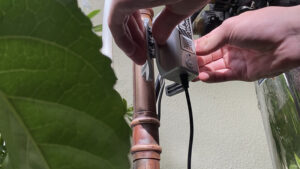
For protection that works around the clock without requiring manual checks, continuous water monitoring provides a different level of coverage. Bluebot smart water meters detect abnormal water flow the moment it starts. Because the system monitors your main water line 24 hours a day with 43,200 data points captured daily, it identifies the continuous flow pattern of a water heater leak often before a single drop reaches the floor. Alerts go directly to your phone, giving you time to act before water damage compounds.
The non-invasive clamp-on installation takes about 15 minutes, requires no pipe cutting or plumber, and begins monitoring immediately. For homeowners who want focused coverage in the area around the water heater, Bluebot’s smart leak detection provides another layer of protection. Smart water leak sensors can also be placed near the base of the tank to provide localized alerts that complement whole-home flow monitoring.
Insurance providers increasingly recognize the value of continuous monitoring systems, with many offering premium discounts of 5 to 10% for homes with installed leak detection. Water utility rebates of up to $200 are also available in many service areas, helping offset the cost of the meter itself.
Water heater leaks range from inexpensive valve replacements to emergencies requiring immediate tank replacement and water damage restoration. Knowing what causes a water heater to leak and recognizing the warning signs that typically precede active leaking puts you in a position to act during the repair window rather than the damage window. Regular maintenance, including annual flushing, anode rod inspection, and T&P valve testing, addresses the most common failure modes before they progress.
For ongoing protection, Bluebot smart water meters continuously monitor your water system, detecting abnormal flow patterns of a developing leak before visible damage occurs. The Bluebot Mini offers an affordable entry point for homeowners who want 24/7 monitoring and early leak alerts without a large upfront investment. Water heaters are just one of many potential sources of leaks in a home. For a broader look at what to watch for, this guide to the most common causes of household water leaks covers additional risk areas worth knowing about. If you suspect a leak in your home but are not sure the water heater is the source, this step-by-step detection guide walks through systematic methods to identify the problem.