Finding a water leak in your house is an ordered diagnostic process. You confirm that water is moving while every fixture is off. You split the house from the service line. You narrow the flow to one fixture or supply line. Then you repair it or hand it to a licensed plumber. The fastest confirmation is the water meter leak test: turn off everything that uses water, write down the meter reading, wait 1-2 hours, and read it again. If the number moved, you have a hidden household water leak somewhere in your plumbing.
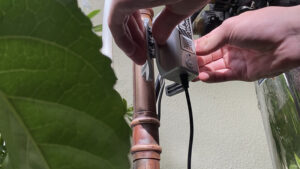
Each step below works, and each works faster with live data. Bluebot clamps onto the outside of your incoming line, with no cutting and no plumber, and shows flow in an app as you open and close valves, so the process becomes something you watch rather than something you infer.
That single test matters because a concealed leak almost never announces itself. It shows up first as a rising water bill. Then comes a musty odor or a soft patch of drywall. Only much later does it become damage you can actually see.
The waste adds up fast. According to the U.S. Environmental Protection Agency’s WaterSense program, the average household’s leaks waste roughly 10,000 gallons of water a year. Nationwide, household leaks waste close to 1 trillion gallons annually. About 10 percent of homes have leaks bad enough to waste 90 gallons or more every day.
So does the repair bill. Insurance Information Institute data reported by ConsumerAffairs and Insurify puts the average homeowners water-damage-and-freezing claim between $13,954 and $15,400. That is why the structural repair bills behind an undetected leak commonly land near $14,000.
What This Guide Covers
By the end of this walkthrough you will have done four things. You will have proven whether a leak exists. You will know whether it sits on your side of the meter. You will have narrowed it to a specific fixture or branch line. And you will know whether it is a ten-dollar flapper swap or a job for a plumber. The same sequence works whether you are chasing an unexplained water bill spike, a hiss with every tap closed, or a warm spot on a tile floor.
A note on timing. The EPA runs its annual Fix a Leak Week from March 16 through 22, 2026. The agency’s own advice is that the whole check takes about ten minutes of active effort. Most of the elapsed time below is waiting, not working.
Time required: 2-3 hours elapsed, roughly 30 minutes of hands-on work
Difficulty: Beginner for Steps 1-3, intermediate for Steps 4-5
Cost: $0 for the diagnosis; parts for a common DIY repair usually run under $20
Key Facts at a Glance
| Signal | What it means |
|---|---|
| Meter moves with everything off | Water is flowing somewhere it shouldn’t: a leak is confirmed |
| Meter stops after closing the main valve | The leak is inside the house |
| Meter keeps moving after closing the main valve | The leak is in the service line between the meter and the house |
| Dye reaches the toilet bowl within 15-20 minutes | The flapper valve is leaking |
| A running toilet | Can waste 200 gallons or more per day, per the EPA |
| A faucet dripping once per second | Wastes more than 3,000 gallons per year, per the EPA |
Before You Start: Tools, Supplies, and One Ground Rule
You need very little equipment. A water meter leak test uses the meter your utility already installed, and the fixture checks use household items.
Tools: access to your water meter (usually a covered box near the street, or an indoor meter near the main shut-off), a flashlight, and a phone for photos and timestamps.
Supplies: food coloring, a rag or paper towel, and (if the toilet turns out to be the culprit) a replacement flapper.
Optional: a smart water meter for continuous flow monitoring, which turns this one-time test into a permanent one.
The ground rule: do not open a wall, cut a slab, or dig a trench to look for a leak. Concealed and service-line pipework requires a licensed plumber with acoustic or thermal equipment, and exploratory demolition usually costs more than the diagnostic call would have. Every step below narrows the search without breaking anything.
The Five-Step Leak Detection Process
Step 1: Confirm a Leak Exists With the Water Meter Test
Before you tear into anything or call anyone, prove that water is actually moving.
Turn off every water-using fixture and appliance in the home: faucets, showers, the dishwasher, the washing machine, the ice maker, any humidifier, and the irrigation controller. Then find your water meter: typically at the curb under a lid marked “Water Meter,” or indoors near the main shut-off in a basement, garage, or utility closet. Write down the reading, including the small digits.
Now wait 1-2 hours without using a drop of water, then read the meter again. If the reading changed and nothing was running, that flow is a leak. Municipal water providers including the Portland Water Bureau and the Seattle-area Saving Water Partnership publish this same two-reading method as the standard homeowner check.
Most meters also carry a faster tell. The leak indicator is a small triangular or star-shaped dial, or a silver wheel, that spins whenever any water passes through the meter. If it turns with every fixture closed, you have continuous flow. It responds to very small flows, so it often catches a slow leak the main dial would miss over a short window.
For homeowners who would rather not stand over a meter box, Bluebot’s smart water meters run this test permanently. A Bluebot Wi-Fi smart water meter measures 43,200 readings per day (one every 2 seconds) and flags continuous flow as it happens instead of at the end of a billing cycle.
Step 2: Check the Usual Suspects First
With a leak confirmed, work from most likely to least likely rather than searching at random.
Start with the toilets. The EPA identifies toilets as one of the most common sources of household leaks, and notes that a toilet running constantly can waste 200 gallons or more per day, often without a sound you would notice. The dye test settles it in minutes. Lift the tank lid, add several drops of food coloring to the tank water, and wait 15-20 minutes without flushing. If color seeps into the bowl, the flapper valve is passing water and needs replacing. Most people can do that repair in one trip to the hardware store.
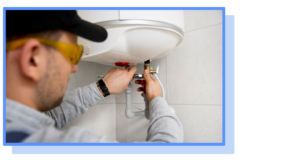
Then inspect visible plumbing. Look under every sink, behind the washing machine, beside the dishwasher, and all the way around the water heater. You are looking for pooling water, green or white corrosion at fittings, swollen cabinet bases, and stained flooring. Water heaters deserve particular attention because they fail from the bottom up; if yours is the suspect, see what causes a water heater to leak.
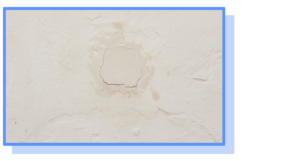
Then read the building. A hidden water leak produces symptoms long before it produces a puddle. Watch for brown-ringed ceiling stains, bubbling or peeling paint, and warped flooring. A persistent musty odor in one room counts too, as does mildew in a spot that has no business being damp. Our guide to the early signs of water damage in walls covers what each symptom typically indicates.
Do not forget outdoors. Hose bibs, spigots, and irrigation lines leak quietly into soil that hides the evidence. If your meter moves in the warm months but not the cold ones, start with the irrigation system: see how to find a leak in a sprinkler system and how to detect a sprinkler leak early.
Step 3: Split the House From the Service Line
This step tells you whether the problem is yours to fix inside the walls or sits in the buried line between the meter and the house.
Find the main water shut-off valve, usually where the supply line enters the building: near the water heater, in the basement, in the garage, or in a utility closet. Close it fully, then go back and watch the meter’s leak indicator.
If the dial stops after you close the main shut-off valve, the leak is inside the house. If it keeps moving with the house isolated, the leak is in the service line between the meter and your shut-off valve. That is an underground leak, and it belongs to a plumber. Depending on where your utility draws the responsibility boundary, part of it may belong to them. Portland Water Bureau and the Hawaii Department of Water Supply both publish this indoor-versus-outdoor split as the standard next move after a positive meter test.
Step 4: Narrow the Source With Isolation Testing
If the leak is inside and the visual sweep comes up empty, use the process of elimination instead of demolition.
Most homes have local shut-off valves at individual fixtures and appliances: under sinks, behind toilets, at the washing machine box, and often on branch lines feeding a bathroom or the kitchen. Close them one at a time, checking the meter after each closure. When the leak indicator stops moving, the section you just isolated contains the leak. That single observation replaces guesswork with a location, and it costs nothing but patience.
Homes with accessible branch shut-offs can go faster: isolate the bathroom group, check, reopen, then isolate the kitchen group and check again. The broader sweep works well when the flow is strong enough to read clearly on the meter.
Real-time data makes this much quicker. With a Bluebot Mini or another Wi-Fi meter installed, the app shows flow stopping the moment you close the right valve. You watch a live chart instead of squinting at a dial and doing arithmetic. Continuous flow monitoring differs from a one-time meter test in a simple way: it watches every hour instead of one. For detached structures, the Bluebot ProLink monitors buildings well beyond Wi-Fi range, reporting over LoRaWAN to a Bluebot Gateway at up to 1.2 miles in urban settings. That covers guest houses, workshops, and barns where an undetected leak can run for weeks.
Step 5: Decide Between a DIY Repair and a Licensed Plumber
Once you know roughly where the water is going, be honest about which side of the line the repair falls on.
Reasonable DIY repairs include replacing a toilet flapper or fill valve, snugging a loose compression fitting under a sink, swapping a worn faucet washer or cartridge, and re-seating a washing-machine supply hose. These need basic tools, cost very little, and carry low downside.
Call a professional for anything inside a wall, under a slab, or underground. Call one for a leak you can hear but cannot find, for repairs requiring soldering or pipe replacement, and for water heater problems beyond a drain valve. Water damage from a failed DIY repair routinely costs more than the service call you were avoiding.
When you do call, hand the plumber your findings. Tell them which isolation valve stopped the flow, where you saw moisture or heard sound, and when the meter first showed movement. Diagnosis is billed by the hour, so the work you already did is money back in your pocket.
Document everything before repairs begin. Photograph visible damage, note when you first discovered the problem, and save your water usage records. Timestamped monitoring data can help establish when abnormal flow began, a distinction that matters because policies typically cover sudden damage and exclude gradual seepage. See does homeowners insurance cover water damage and, if you end up filing, how to make a successful water leak insurance claim.
When the Leak Is Hidden: Slab, Underground, and In-Wall Leaks
Some leaks never surface at a fixture. These are the ones worth recognizing early.
A slab leak is indicated by a warm spot on the floor. A broken hot-water line heats the concrete above it. The other tell is a faint hiss you can hear with every tap in the house closed. Cracked tile, a shifting floor, and unexplained damp carpet edges point the same direction. An in-wall leak tends to announce itself with a stain that keeps returning after you paint over it. Our dedicated guide covers how to find a water leak inside a wall in more detail.
Professional leak detection resolves all three without demolition. Acoustic equipment amplifies the sound of escaping water through listening discs, so a technician can trace a line under concrete. Thermal imaging finds the temperature difference a leaking hot-water line creates behind a surface. Both are non-invasive. That is exactly why they cost less than opening a wall to look.
How to Stop the Next Leak Before It Starts
Detection is reactive. The reason the same homeowners keep finding leaks late is that the meter test only tells you what was true during the two hours you were watching it.
Continuous monitoring closes that gap. A smart water meter sits on the main line and reads flow constantly, so an unattended drip that starts on a Tuesday afternoon raises an alert rather than surfacing on next month’s bill. Bluebot smart water meters install in about 15 minutes without cutting pipes, then watch flow around the clock and notify you when the usage pattern looks like a leak rather than like a shower. The details of how the sampling and alerting work are on the how it works page.
As of 2026, the Bluebot Mini starts at $258.76 and the flagship Bluebot Hero starts at $558.34. Each includes a year of premium data streaming. The Mini fits 3/4-inch to 1-inch pipes; the Hero covers 3/4-inch to 2-inch. Both are rated for indoor and outdoor installation. If you are weighing options, the Bluebot vs Flume comparison lays out how the two approaches to whole-home flow monitoring differ. Leaks show up on the bill before they show up on the ceiling, so how to save money on your water bill is a useful companion read.
To be clear about what monitoring does and does not do: it detects abnormal flow and alerts you sooner. It does not stop a pipe from failing, and no device removes the need for repairs. What it changes is how long water runs before someone notices.
Troubleshooting: When the Meter Test Is Ambiguous
The meter barely moved. Very small leaks can take longer than two hours to register on the main dial. Re-run the test overnight, or watch the leak indicator instead; it responds to far smaller flows.
The indicator spins, but only sometimes. Intermittent movement usually means a fixture is cycling rather than leaking continuously. An ice maker, a water softener regenerating, a recirculation pump, or a smart irrigation controller running a scheduled zone will all move a meter. Confirm every automatic device is off before you trust the result.
Everything checks out, but the bill is still high. Compare this period against the same month last year rather than against last month, since seasonal irrigation swings dominate summer usage. If the increase is real and no leak is present, ask your utility to verify the meter itself.
You found moisture but no source. Water travels along joists and pipe runs before it drops, so the wet spot is often well away from the failure. This is the point to stop guessing and book professional leak detection.
Related Bluebot Guides
- How to find a water leak inside a wall: the in-wall subset of this process
- Early signs of water damage in walls: reading symptoms before the damage spreads
- What causes a water heater to leak: a frequent appliance-side source
- How to find a leak in a sprinkler system and how to detect a sprinkler leak early: the outdoor branch
- Does homeowners insurance cover water damage and how to make a successful water leak insurance claim: what happens after the damage
- How to save money on your water bill: the cost side of the same data
- Bluebot vs Flume comparison and how it works: choosing and understanding continuous monitoring
About the Author
Matthew Olin is the Founder and CEO of Lookout Lab, Inc., the company behind Bluebot smart water meters. He has spent his career building water monitoring hardware and the data systems behind it, and writes about residential water use, leak detection, and the economics of catching problems early. This guide was last reviewed in February 2026.
Frequently Asked Questions
How much does it cost to have a plumber find a water leak?
Professional leak detection is normally billed as a diagnostic visit separate from the repair, and hourly search time is the main variable. You can cut that time directly. The isolation testing in Step 4 tells the plumber which branch line is leaking before they arrive, and non-invasive acoustic or thermal imaging equipment costs less than opening a wall to look.
What should I do first when I find a water leak?
Shut off the water. Close the fixture’s local shut-off valve if the leak is at a sink or toilet, or the main water shut-off valve if you cannot isolate it. Then photograph the damage and note the time you discovered it. Timestamped evidence matters because policies typically cover sudden damage and exclude gradual seepage. Start the repair after that.
Why do hidden water leaks go unnoticed for so long?
A concealed leak inside a wall, under a slab, or in a service line has somewhere to drain, so it never produces a puddle. It surfaces on the water bill first, then as a musty odor or a returning stain, and only later as visible damage. The EPA estimates the average household’s leaks waste roughly 10,000 gallons a year, much of it invisibly.
When does a small water leak become urgent?
Sooner than most homeowners expect. According to the EPA, a toilet running constantly can waste 200 gallons or more per day, and a faucet dripping once per second wastes more than 3,000 gallons per year. Damage is the bigger clock. Water tracks along joists and into drywall continuously, so a slow leak behind a surface compounds every day it runs.
Can you have a water leak with no visible water damage?
Yes, and it is common. The water meter leak test exists for exactly that case, because it detects flow rather than damage. Turn off every fixture, note the meter reading, wait 1-2 hours, and read it again. Movement with nothing running means water is going somewhere in your plumbing, even when every wall and ceiling in the house looks dry.
Do smart water meters actually find leaks, or just track water use?
They detect abnormal flow, which is how a hidden leak reveals itself. A Bluebot Wi-Fi smart water meter measures 43,200 readings a day, one every 2 seconds, and alerts you when the pattern looks like continuous flow rather than a shower. It does not pinpoint the leak inside a wall, and no monitor stops a pipe from failing.
Does homeowners insurance cover a water leak in your house?
It depends on the cause. Policies typically cover sudden and accidental water damage and exclude gradual seepage from deferred maintenance, so evidence of when the leak began is often decisive. Save your photographs, the discovery date, and any timestamped water usage records. Bluebot’s guide to making a successful water leak insurance claim walks through the filing process.