If your basement is flooded, stay out of the water until you know the power to that area is off, stop the water if it is coming from a pipe or appliance, take photos, then start removing water and drying the space as fast as you can. The EPA (2026) advises drying water-damaged areas and items within 24 to 48 hours to prevent mold growth. The first hour of a flooded basement is mostly about safety and finding where the water came from, because the source decides how you clean up, what insurance may cover and how you prevent the next one. Bluebot makes a clamp-on smart water meter that alerts you to plumbing leaks on the supply line. It cannot see rain, groundwater or sewer backups, and this guide says plainly which is which. Below: the first-hour checklist, the source table, cleanup, insurance and prevention.
What to Do If Your Basement Floods: The First-Hour Checklist
Make the space safe first, then find and stop the source, then photograph the damage, then remove the water and start drying. Grabbing a pump comes later than most people expect, because the first risk when there is standing water in the basement is electrical, not the water itself.
Electrical safety comes before every step. Do not step into standing water that could reach outlets, extension cords, appliances, the furnace, the water heater or the electrical panel. Shut off power at the breaker only if you can reach the panel without standing in water. If you cannot, call your electric utility or a licensed electrician. If you smell gas, leave and call the gas utility from outside. Ready.gov (2026) and the CDC (2026) give the same advice.
- Make it safe, then stop the water at its source. If a pipe, water heater or appliance is leaking, stop the water first by closing the main water shut-off valve. Rain or groundwater cannot be turned off, so focus on safety and on moving belongings.
- Put on protective gear. Wear waterproof boots and gloves, and add a mask if the water may contain sewage. Ready.gov warns that floodwater can be contaminated.
- Work out what kind of water it is. Clean supply water, rain or groundwater, and sewage each need different handling, which is why flooded basements are never one problem with one fix. The source table in the next section shows how to tell them apart.
- Photograph and video the damage before you move anything. Capture the water line on the walls, the damage itself and each damaged item, because your insurer will want to see conditions as you found them.
- Call your insurance company to report the loss. Ask what they need from you; the insurance section below explains why the source of the water matters to the claim.
- Move valuables, electronics and anything on the floor to a dry level. Work only where the power is off or the floor is dry.
- Start removing water and get air moving. Follow the cleanup steps below, and go slowly with deep water when the ground outside is still soaked.
Why Did Your Basement Flood? Find the Source Before You Clean
Basement flooding comes from one of four sources: outside, below, equipment or inside plumbing. Outside water is heavy rain, snowmelt and groundwater pushing through foundation cracks or the joint where the floor meets the wall, and poor grading, clogged gutters or open window wells often make it worse. Water from below is a sewer or floor-drain backup. Equipment means a sump pump that failed or could not keep up. Inside plumbing means a burst or leaking supply pipe, a leaking water heater or a failed washing machine hose. Pin down the origin of the water before you clean.
| Source | Common clues | Is the water clean? | Can you turn it off? |
|---|---|---|---|
| Storm or surface water | Water arrives during or right after heavy rain or snowmelt, often at window wells or low doors | No; treat it as contaminated | No; manage it outside the house |
| Groundwater seepage | Water seeps along the walls, through cracks or where the floor meets the wall, sometimes days after rain | Usually not; treat it with care | No |
| Sump pump failure | The sump pit is full or overflowing, often after a power outage or a hard storm | Usually not | Only by restoring or replacing the pump |
| Sewer or drain backup | Water rises from a floor drain or the lowest fixture and smells of sewage | No; it is sewage, so gear up or call a pro | No; stop using sinks, toilets and appliances that drain |
| Plumbing leak | Water near a pipe, the water heater or the washer that keeps coming on a dry day; with every fixture off, the water meter still shows flow | Usually clean at first | Yes, at the main shut-off valve |
Flooded Even With a Sump Pump?
A sump pump that fails is one possible cause of basement flooding, usually for one of these reasons: a power outage with no battery backup, a pump overwhelmed by heavy rain, a stuck float switch, a clogged or frozen discharge line, or an old pump near the end of its service life. Check the pit, the float and the discharge line once the power is safe.
The source, meaning why your basement flooded and how water got in, decides your cleanup, your insurance claim and your prevention plan.
How to Clean Up a Flooded Basement and Dry It Out
Flooded basement cleanup, like any flood cleanup, runs in a fixed order: water removal first, then stripping out what is soaked, then drying out the basement, then cleaning and disinfecting.
- Remove the water. Use a wet-dry vacuum for shallow water and a submersible or utility pump for deeper water, once the power to the area is confirmed safe. If the ground outside is still saturated, pump deep water out gradually over several days rather than all at once. The NDSU Extension flooded-basement guide explains that water inside helps brace the walls against wet soil, so pumping too fast can push walls in or floors up.
- Take out wet contents, carpet and pad. Porous materials hold water against the floor, and the EPA notes that carpet that becomes moldy may have to be thrown away.
- Cut out soaked drywall and insulation above the water line so the wall cavity can dry. Restoration crews call this a flood cut.
- Dry with fans and dehumidifiers. Open windows only when the outdoor air is drier than the basement air, and aim to dry everything within 24 to 48 hours to limit mold growth, the window the EPA gives.
- Clean, then disinfect hard surfaces. Scrub hard surfaces with detergent and water, then disinfect following EPA or CDC guidance. Never mix bleach with ammonia or other cleaners: the EPA warns that toxic fumes could be produced.
When to Call a Water Damage Restoration Pro
Some cleanup and drying jobs are not do-it-yourself work. Call a professional restoration company if any of these apply:
- The water is sewage or came up from a drain.
- The water is deep or still rising.
- Water reached the electrical panel or the furnace.
- You see new foundation cracks or bowing walls.
- Mold covers more than about 10 square feet, the size the EPA treats as beyond a do-it-yourself job.
- You cannot dry the space within 48 hours.
Insurance and a Flooded Basement: Why the Water’s Source Matters
Whether a flooded basement is covered usually depends on where the water came from, and policies vary, so read your own. Bluebot’s guide to what homeowners insurance covers explains standard policies in full; the table below is the basement version.
| Water source | Usually covered by | Watch for |
|---|---|---|
| Sudden, accidental discharge from plumbing or an appliance | Often a standard homeowners policy | Usually the water damage, not always the part that broke |
| Surface water and rising floodwater from storms | Usually not homeowners; it often needs separate flood insurance, such as the National Flood Insurance Program (NFIP) or a private flood policy | NFIP basement coverage is usually limited (FEMA NFIP fact sheet, 2022) |
| Sewer or drain backup and sump pump overflow | Usually only a water backup endorsement | Often has its own limit, so check yours before storm season |
| Slow seepage or a long-term leak | Often excluded as gradual damage or maintenance | Small leaks are usually cheaper to fix than to claim |
Coverage descriptions follow the Insurance Information Institute’s coverage guide and vary by insurer and state. Photograph everything before cleanup, keep receipts and damaged items until the adjuster sees them, and take reasonable steps to stop further damage. When you are ready, here is how to file a water damage insurance claim step by step.
How to Prevent the Next Basement Flood
Prevention depends on the source, so match the fix to the way water got in. No single device prevents a basement flood on its own; layering the fixes below lowers the risk.
Keep Outside Water Away
Many wet basement problems start with water that pools next to the house. Grade the soil so it slopes away from the foundation. Clean gutters, extend downspouts away from the house, cover window wells and seal visible foundation cracks. Interior drain tile and basement waterproofing are contractor jobs.
Keep the Sump Pump Ready
Test the pump by pouring a bucket of water into the pit until it switches on. Add a battery or water-powered backup for outages, keep the discharge line clear and pointed away from the foundation, and consider a high-water alarm.
Block Sewer Backups
A backwater valve lets wastewater leave the house and closes when the sewer line pushes back. Have a licensed plumber install it, because a permit may be required where you live.
Catch Plumbing Leaks Early
Replace old rubber washing machine hoses with braided hoses, keep an eye on an aging water heater, and know where your main shut-off valve is. Spot water sensors on the floor near the sump pit, water heater and washer sound an alarm when they get wet; our guide on where to place water leak sensors covers placement. Whole-home flow monitoring with a Bluebot meter alerts you to unusual flow on the supply line, and the next section sets out exactly what it can and cannot catch.
Preventing a flood usually costs far less than restoring a basement, and Bluebot’s comparison of prevention vs. restoration costs shows why.
What a Smart Water Monitor Can (and Can’t) Catch in Your Basement
A clamp-on smart water meter measures water moving through the supply pipe it is clamped to, so it can alert you to plumbing leaks downstream of the meter. It cannot detect groundwater, rain runoff, sewer or drain backups or a failed sump pump, because none of that water passes through the supply line.
| Can alert you to | Can’t detect |
|---|---|
| A burst or leaking supply pipe | Rain or snowmelt coming in |
| A leaking water heater that keeps refilling | Rising groundwater |
| A failed washing machine supply hose | A sewer or floor-drain backup |
| A fixture left running | A sump pump failure |
| A leak on a drain line, or on piping upstream of the meter |
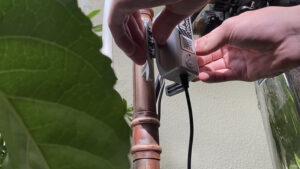
Bluebot clamps onto the outside of the supply pipe, wherever it runs through your basement or utility room, with no pipe cutting, no water shutoff and no plumber required. The 100-W (Bluebot Hero) detects flow as low as 0.1 GPM (0.38 L/min), and the 50-W (Bluebot Mini) detects flow as low as 0.3 GPM (1.1 L/min). Alerts arrive in the bluebot Water app.
Bluebot detects and alerts; it does not close a valve, so you, or someone you reach, still shuts off the main. For water from outside or below, pair it with spot sensors near the sump pit and a sump pump high-water alarm, because those see water on the floor whatever its source.
Related Guides
- If your flood reached hardwood or engineered flooring upstairs or on a finished basement floor, our next guide covers water damage on wood floor and how to dry it.
- To start over from the beginning, return to the first-hour checklist at the top of this page.
Frequently Asked Questions
Is it safe to walk into a flooded basement?
Not until the power to the basement is off. Standing water that reaches outlets, cords, appliances or the electrical panel can carry current, so shut off the breaker only from a dry spot, or call your electric utility or a licensed electrician. If you smell gas, leave and call the gas utility from outside. Once the power is off, wear waterproof boots and gloves before you go in.
Should you pump all the water out of a flooded basement at once?
No, not while the ground outside is still saturated after the basement flooded. Water inside helps brace the walls against the pressure of wet soil, so pumping it out too fast can push walls in or floors up, according to NDSU Extension. Pump deep water out gradually over several days once outside water goes down. Shallow water from a plumbing leak can usually be removed right away.
How long does it take a flooded basement to dry out?
Aim to have it dry within 24 to 48 hours, the window the EPA gives for drying water-damaged areas to prevent mold growth. Real drying time depends on how deep the water was, which materials got wet and the weather. Fans, dehumidifiers and removing soaked carpet and drywall all speed it up. If you cannot dry the space within 48 hours, call a restoration professional.
Who should I call first when my basement floods?
Call your electric utility or a licensed electrician first if water may reach outlets or the panel and you cannot shut off the breaker from a dry spot, and call the gas utility if you smell gas. Once the space is safe, call your insurance company to report the loss. Call a restoration company for sewage, deep or rising water, or a space you cannot dry within 48 hours.
Is a flooded basement from a failed sump pump covered by insurance?
Usually not under a standard homeowners policy alone. Sump pump overflow and drain backups are usually covered only if you added a water backup endorsement, and that endorsement often carries its own limit. Flood insurance usually does not cover it either. Coverage varies by insurer and state, so read your policy and ask your agent before the next storm season.
How can I tell if basement water is from a plumbing leak or from groundwater?
Watch when and where it appears. Groundwater usually seeps in along the walls or where the floor meets the wall during or after rain, while a plumbing leak keeps coming on a dry day near a pipe, the water heater or the washer. For a quick test, turn off every fixture and check your water meter: if it still shows flow, water is escaping from the plumbing.
Can a Bluebot meter warn me about a basement flood from heavy rain?
No. A Bluebot meter clamps onto your supply pipe and measures the water moving through it, so it alerts you to plumbing leaks such as a burst pipe or a failed washing machine hose, not to rain, groundwater or a backed-up drain. For water from outside or below, use spot water sensors near the sump pit and a sump pump high-water alarm.