Plumbing leak detection is the set of methods, tools, and services used to locate water escaping a plumbing system before it turns into costly water damage. It works on three levels: warning signs you can spot yourself, professional diagnostics such as acoustic listening and thermal imaging, and continuous monitoring from a smart water meter. The goal is the same at every level. Find the leak while the repair is still small.
Of those three levels, continuous monitoring is the one that gets a household ahead of the problem instead of reacting to it. Bluebot clamps onto the outside of the pipe, with no cutting and no plumber, and reads true flow through the pipe wall, so a slow leak registers as an anomaly long before it becomes a repair.
Speed matters more than most homeowners expect. As of 2026, the U.S. Environmental Protection Agency’s WaterSense program estimates that the average family wastes 180 gallons of water a week, or roughly 9,400 gallons a year, through household leaks nobody notices. A pipe does not have to burst to be expensive. It only has to run.
Key facts about plumbing leaks and water damage
The first four figures below come from the EPA’s WaterSense program; the next two are from the Insurance Information Institute, and the last is EPA mold guidance (2026).
- 9,400 gallons per household, per year: average household leak waste, or about 180 gallons a week.
- Nearly 900 billion gallons wasted nationwide each year: equal to the annual household water use of almost 11 million homes.
- 9% of homes leak 50 gallons or more per day: these are the ones worth hunting first.
- About 10% off a water bill: the typical saving from fixing easily corrected household leaks.
- 27.6% of homeowners insurance claims in 2022 were water damage and freezing.
- $13,954 average claim severity for that same category across 2018 through 2022.
- 24 to 48 hours: dry wet materials inside that window and, in most cases, mold will not grow.
Those last three numbers explain why speed is worth paying for. A leak that runs for a week is a plumbing repair. One that runs for a month can become a structural repair, a remediation, and an insurance claim at once. The gap between those two outcomes is usually measured in days, not dollars.
What are the warning signs of a plumbing leak?
Most hidden leaks announce themselves before anyone sees water. Six signals do the announcing, and any one of them is worth acting on.
- An unexplained high water bill. A jump in cost without a matching change in habits is the single most common tell. Our guide to a high water bill with no visible leak walks through how to read that spike.
- Low water pressure. Pressure that drops at every fixture often means water is leaving the system somewhere upstream.
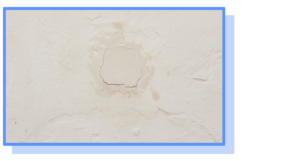
- Damp or discolored walls and ceilings. Staining, bubbling paint, or a soft spot in drywall points to a hidden water leak behind the surface.
- Mold or mildew growth. Persistent moisture feeds mold, so a musty smell in a dry room is a moisture problem until proven otherwise.
- The sound of running water. If you hear water moving with every fixture closed, something is still flowing.
- Pooling around fixtures or pipes. Standing water at a toilet base, water heater, or supply line is a leak that has already started causing damage.
Not every leak is dramatic. EPA’s Fix a Leak Week (2026) identifies worn toilet flappers, dripping faucets, and other leaking valves as the most common household leaks, and a silent toilet leak can run for months without a sound. A Bluebot meter catches those too: continuous flow readings turn a slow drip or a worn valve into a clear signal well before a bill or a stain would.
How do professionals find hidden leaks?
Professional plumbing leak detection is largely non-destructive. Four techniques do most of the work, and each one reads a different signal.
Acoustic listening devices
Acoustic leak detection amplifies the sound pressurized water makes as it escapes a pipe. A technician moves a ground microphone along the line and listens for the signature hiss. This is the standard method for buried supply lines and slab leaks, and it is the same approach the American Water Works Association describes in its M36 water-loss framework (2024), where utilities run proactive acoustic surveys to find what AWWA classifies as real losses. For an underground water leak, acoustics usually get the first look.
Video pipe inspection
A sewer camera inspection sends a small camera down the line on a flexible rod. It shows cracks, root intrusion, separated joints, and blockages directly, so the diagnosis is visual rather than inferred. Drain and waste lines are its natural territory, because they are not pressurized and cannot be pressure-tested the same way.
Pressure testing
Pressure testing isolates a section of pipe, brings it to a known pressure, and watches whether that pressure holds. A measurable drop across a closed interval confirms a leak exists and narrows down which branch it is on. It answers, “Is there a leak?” with more certainty than any symptom does, though it does not by itself pinpoint the spot.
Thermal imaging
An infrared camera reads the temperature differential that moving water creates inside a wall or under a floor. Cool spots trace a cold supply line; warm spots trace a hot one. Thermal imaging is well suited to a water leak inside a wall, where nothing is visible and opening the drywall is the alternative.
What tools detect leaks at home?
Four device categories cover most household plumbing leak detection, and they solve different problems.
- Smart water meters measure whole-home flow continuously and flag usage patterns that do not fit normal behavior.
- Water leak detectors are small point sensors placed where water should never be, such as under a dishwasher or behind a toilet, and they alarm on contact.
- Soil probes help locate wet ground over an underground supply or irrigation line.
- Flow sensors measure water movement through a specific line and reveal flow that should not be happening.
Continuous monitoring differs from a professional inspection in one dimension that matters: coverage over time. An inspection tells you what is true during the hour a technician is at your house. A smart water monitoring system watches every hour, which is why it catches the slow, silent leaks that only reveal themselves across days.
How Bluebot fits in
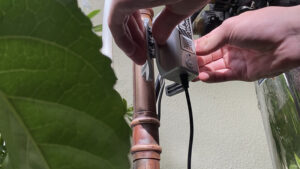
Bluebot is an ultrasonic clamp-on smart water meter. It reads flow through the pipe wall, so installation takes about 10 minutes with the bluebot Water app and needs no cutting, no tools, no plumber, and no shutting off your water supply. Because it clamps on rather than cutting in, a Bluebot goes where a cut-in meter cannot: inside an irrigation valve box, on a single tenant’s line, under a kitchen sink, on the pipe you actually want to watch, and it moves whenever you do. The 100-W (Bluebot Hero) and 100-WAN (Bluebot ProLink) fit more than 80 pipe types, including copper, PVC, PEX, and galvanized, across 3/4 inch through 2 inch pipe.
The measurement side is where the numbers matter. The Bluebot Hero and ProLink report flow to within plus or minus 1 to 2 percent and raise real-time alerts on flow as low as 0.1 gallons per minute, the range a dripping faucet or a weeping joint lives in. Both are rated IP65 for indoor and outdoor use. The Bluebot Mini reads to within plus or minus 3 to 5 percent with 0.3 gallons per minute sensitivity and is rated IP68. Real-world accuracy varies with pipe material, pipe size, and installation quality.
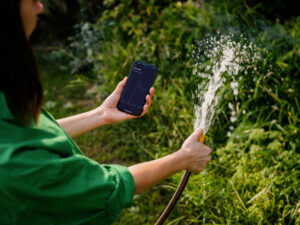
The meter syncs with bluebot Water, the companion app, so you can set custom alerts and get real-time notifications when flow does not match your normal pattern. The app also tracks daily and monthly usage, shows historical trends, and converts consumption into dollars with Dollarize™, so 9,400 wasted gallons stops being an abstraction and starts being a line on your bill. As of 2026 the lineup runs three models. The 50-W (Bluebot Mini) and 100-W (Bluebot Hero) use built-in Wi-Fi and connect straight to the Bluebot Cloud. The 100-WAN (Bluebot ProLink) uses LoRaWAN and pairs with a Bluebot Gateway, sold separately, for properties where Wi-Fi does not reach. You can read more on how installation and monitoring work.
When should you call a professional leak detection service?
Monitoring tells you that water is escaping. It does not always tell you where. Four situations call for a professional leak detection service rather than a do-it-yourself hunt.
- A suspected slab leak. Water moving under a concrete slab can undermine a foundation, and locating it takes acoustic equipment.
- Significant water damage with no visible source. When the damage is obvious but the origin is not, the leak is behind something.
- A suspected underground pipe leak. Buried supply and irrigation lines need acoustic gear or soil probes to trace.
- Persistent toilet leaks or dripping faucets that keep driving the bill up after a basic repair.
A professional plumber can combine sewer camera inspections, acoustic sensors, and thermal imaging to pinpoint the location before anyone opens a wall or a driveway. If you are weighing providers, our guide on choosing a water leak detection company covers what to ask.
How Bluebot helps you get ahead of plumbing leaks
Prevention is mostly a habit, not a project. Five measures carry most of the benefit.
- Inspect plumbing fixtures regularly. Check under sinks and around the water heater for corrosion, drips, and loose connections.
- Monitor your water bill. Unexpected increases are a leak signal you already receive every month.
- Clamp on a Bluebot meter. Continuous flow data turns a monthly signal into a real-time one, on the line you care about.
- Check for underground leaks. Use a soil probe, or have a plumber inspect irrigation and supply lines periodically.
- Address minor leaks immediately. A small fix now avoids the extensive damage and repair cost later.
Two free tests come straight from EPA WaterSense. For the water meter test, the EPA advises checking your meter before and after a two-hour period when no water is being used; if the meter changes at all, you probably have a leak. For a silent toilet leak, the EPA suggests placing a few drops of food coloring in the tank, and if any color shows up in the bowl after 10 minutes, you have a leak.
There is a financial angle too. Many home insurers offer premium credits for smart leak detectors, though eligibility, credit size, and availability vary by carrier and by state, so check your own policy before assuming a discount applies. Whether or not a credit is available, the arithmetic still favors acting early: the Insurance Information Institute puts the average claim in this category near $14,000, and the EPA’s drying guidance means the difference between a repair and a remediation is often a single weekend. Catch it early and you may never file at all. If you do, our guide on whether homeowners insurance covers water damage explains what is typically covered.
Take control of your water use
Plumbing leaks waste water, raise bills, and quietly damage buildings. The fix is not complicated. Learn the six warning signs, know which detection method suits which problem, and escalate to a professional when the source stays hidden. A clamp-on Bluebot meter handles the continuous-monitoring piece, watching flow around the clock so a leak shows up as an anomaly long before it becomes a claim. See the full Bluebot lineup to find the model that fits your home.
Frequently Asked Questions
How do I know if I have a hidden plumbing leak?
Check your water bill first, because an unexplained increase is the most common sign of a hidden leak. Then run the meter test: shut off every fixture, note the reading, wait two hours, and read it again. Movement with everything off confirms water is escaping. Damp walls, low water pressure, a musty smell, or the sound of running water all point the same way.
How do plumbers find leaks without breaking walls?
Plumbers use four non-destructive methods. Acoustic listening devices amplify the sound of water escaping a pressurized pipe. A sewer camera inspection sends a camera into the line to see cracks directly. Pressure testing confirms a leak by watching whether an isolated section holds pressure. Thermal imaging reads the temperature differential a leak creates behind a wall or under a floor.
How much water does a household leak waste?
The EPA’s WaterSense program estimates the average family wastes 180 gallons a week, or roughly 9,400 gallons a year, on leaks. Nationwide that reaches nearly 900 billion gallons annually, about what 11 million homes use in a year. WaterSense also reports that 9 percent of homes leak 50 gallons or more per day.
Does homeowners insurance cover a plumbing leak?
It depends on the cause. The Insurance Information Institute states that standard policies cover accidental discharge or overflow of water from a plumbing system, but will not cover damage due to lack of maintenance. Triple-I data also shows water damage and freezing made up 27.6 percent of homeowners claims in 2022, at an average severity of $13,954. Check your own policy, since terms vary by carrier and state.
Can I find a plumbing leak myself?
Often, yes. The water meter test and the toilet dye test both cost nothing and catch the two most common leaks. Drop a dye tab in the tank, wait 10 minutes, and color in the bowl means the flapper is passing water. A smart water meter automates the same monitoring around the clock. Buried lines and slab leaks still need professional equipment.
How fast does mold grow after a water leak?
The EPA advises that drying wet materials within 24 to 48 hours means mold will not grow in most cases. That window is guidance rather than a guarantee, since growth also depends on temperature, humidity, and the material itself. It is the main reason detection speed matters: the gap between a simple repair and a remediation job is usually measured in days.
Do smart water meters actually detect leaks?
Yes, by watching flow instead of waiting for visible water. A smart water monitoring system measures whole-home flow continuously and flags patterns that do not fit normal use. The Bluebot Hero, for example, alerts on flow as low as 0.1 gallons per minute at plus or minus 1 to 2 percent accuracy, which is the range a slow drip occupies.
When should I call a professional leak detection service?
Call a professional when you suspect a slab leak, when there is significant water damage with no visible source, when an underground pipe may be leaking, or when toilet leaks and dripping faucets keep driving the bill up after a basic repair. Those situations need acoustic equipment, soil probes, or thermal imaging to locate the source without opening walls.