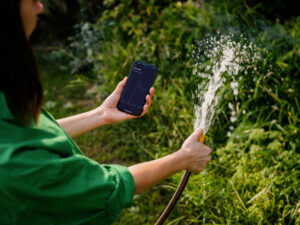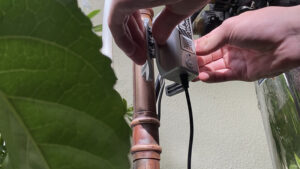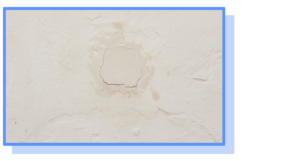
Most household water waste is invisible, which is why it survives: a hidden leak inside a wall, a toilet running at 3 a.m., a sprinkler line weeping underground all summer. A Bluebot smart water meter clamps onto the outside of almost any pipe, anywhere you actually need the reading: the irrigation valve box, the under-sink line, a tenant line, a commercial main. There is nothing to cut, no water to shut off, and no plumber to book. That placement freedom is the point, because the water you waste is rarely wasted where you are standing.
The eight tactics below run cheapest and highest-return first. Seven you can start this weekend with a wrench and a timer. The eighth is measurement, and it is the one that tells you whether the other seven worked.
Key facts, verified 2026
- Household leaks waste nearly 1 trillion gallons of water annually nationwide.
- Fixing easily corrected leaks saves about 10 percent on a water bill.
- A single faucet dripping once per second wastes more than 3,000 gallons a year.
- Outdoor use is more than 30 percent of the average household total, and up to 60 percent in arid regions.
- The Bluebot Hero detects flow as low as 0.1 GPM (0.38 L/min), which is roughly a drip.
How Much Water a Household Really Wastes
The average American uses 82 gallons of water a day at home, on the U.S. Geological Survey’s 2015 estimate, and household leaks alone add more than 9,300 gallons a year on top of that. According to EPA WaterSense Fix a Leak Week figures (2026), 9 percent of homes have leaks that waste 50 gallons or more per day, and those leaks add up to nearly 1 trillion gallons annually across the country.
Here is the useful part of that number. Fixing the easy ones saves about 10 percent on a water bill, and the average family spends more than $1,000 a year on water. That is roughly $100 back for an afternoon of work, before you change a single habit.
|
What it is |
What it wastes or saves |
Source |
|---|---|---|
|
Household leaks, nationwide |
Nearly 1 trillion gallons a year |
|
|
Faucet dripping 1 drip per second |
More than 3,000 gallons a year |
EPA WaterSense, Fix a Leak Week (2026) |
|
Showerhead leaking 10 drips per minute |
More than 500 gallons a year |
EPA WaterSense, Fix a Leak Week (2026) |
|
Irrigation leak the width of a dime |
About 6,300 gallons a month |
EPA WaterSense, Fix a Leak Week (2026) |
|
High-efficiency fixtures and appliances |
About 30 percent of indoor use |
|
|
WaterSense labeled irrigation controller |
Up to 15,000 gallons a year |
|
|
Turning off the tap while brushing |
8 gallons a day |
|
|
Unmaintained automatic irrigation |
Up to 25,000 gallons a year |
EPA WaterSense, Statistics and Facts (2026) |
1. Fix the Leaks You Can Find, and Let Bluebot Find the Ones You Cannot
Start with the three cheap culprits: worn toilet flappers, dripping faucets, and loose or damaged valves. A worn flapper is the sneakiest of the three, because a toilet can leak silently for months without ever making the sound that would tell you to look.
There is a free check you can run this afternoon. Pick an hour when nobody is using water, read your meter at the start and again at the end, and if the number moved, water is going somewhere you did not send it. EPA offers a version that needs no stopwatch: if a family of four uses more than 12,000 gallons a month, assume a serious leak until you prove otherwise.
Both checks share one limit. They tell you something is leaking on the day you happen to look, not what, not where, and not whether it comes back in March.
That is the gap a Bluebot meter closes. The Bluebot Hero reads flow as low as 0.1 GPM (0.38 L/min), about the rate of a slow drip. It keeps reading every minute of every day, not just during the one hour you remembered to check. Bluebot does not shut your water off, deliberately. It is a meter, not a valve, and that is exactly what lets it go on the pipe that matters instead of only on the main.
2. Install Water-Efficient Appliances and Fixtures
Homes with high-efficiency plumbing fixtures and appliances save about 30 percent of indoor water use and cut water, sewer, and energy bills at the same time, according to ENERGY STAR (2026).
When you replace a dishwasher, a washing machine, or a showerhead, look for two labels. WaterSense covers water efficiency, and ENERGY STAR covers energy. Products carrying the WaterSense label use at least 20 percent less water than standard models while performing as well or better, so this is not a comfort tradeoff.
The showerhead is the best first purchase. Per EPA WaterSense showerhead guidance (2026), swapping to a labeled model saves the average family more than 2,700 gallons a year and about $70 in water and electricity. Retrofitting the whole house with WaterSense fixtures and ENERGY STAR appliances saves more than $380 a year.
Many water utilities will pay you back for part of this. Bluebot maintains a rebate finder for exactly that reason.
3. Upgrade an Outdated Irrigation System
Outdoor water is where the big numbers live. Outdoor use accounts for more than 30 percent of total household water use on average, and as much as 60 percent in arid regions. As much as half of it is lost to wind, evaporation, and runoff before it ever reaches a root.
A clock-based controller waters on a schedule whether or not it rained. Replacing it with a WaterSense labeled irrigation controller cuts a home’s irrigation use by up to 30 percent and saves up to 15,000 gallons a year, per EPA WaterSense labeled controller data (2026). Rain sensors, drip irrigation, and seasonally calibrated timers do the same job from different angles: they stop water that nothing is asking for.
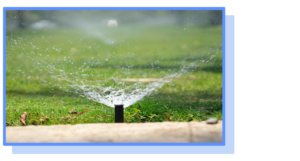
An automatic irrigation system that is not properly maintained can waste up to 25,000 gallons a year on its own, and an irrigation leak the width of a dime runs about 6,300 gallons a month. Both of those are underground, and neither shows up on a walk around the yard. A Bluebot Mini is built for that specific problem: it is rated IP68, fits 3/4 inch and 1 inch pipe, and is small enough to sit in the irrigation valve box itself, which is where the answer actually is.
4. Turn Off the Tap During Everyday Tasks
This is the tactic with the best ratio of effort to result. Turning off the tap while brushing your teeth saves 8 gallons a day, and turning it off while shaving saves 10 gallons per shave, according to EPA WaterSense statistics (2026). Brush twice a day and shave five times a week and that is nearly 5,700 gallons a year from two habits.
The same logic applies at the sink. Running a faucet for 5 minutes while washing dishes wastes 10 gallons and burns enough energy to run a 60-watt bulb for 18 hours. Rinse dishes and produce in a basin, and run the dishwasher only when it is full, which saves nearly 320 gallons a year.
5. Harvest and Reuse Rainwater
Rainwater is not for drinking unless it has been properly filtered and treated. It is very good at everything else: watering gardens, washing, and flushing toilets. Every gallon you catch is a gallon you do not buy.
Three things make the difference between a working system and a green barrel of mosquitoes:
- Use food-grade rain barrels. Whatever bin is already in the garage is the wrong container. Buy barrels rated for the job.
- Position them under the downspouts. Divert the downspout directly into the barrel rather than hoping for runoff.
- Plan the filtration first. Match the filter to the use. Garden watering and toilet flushing have different tolerances for debris.
6. Landscape for the Water You Actually Have
Landscaping choices decide your outdoor number before any controller gets involved. Drought-resistant planting and xeriscaping cut water use substantially and still look good, which is the real objection.
Three strategies do most of the work:
- Mulching. A layer of mulch slows evaporation and holds soil moisture. Re-mulch seasonally or the effect fades.
- Grouping plants by need. Put the thirsty plants together so you can water a zone instead of a yard.
- Measuring the irrigation line. You cannot tune a schedule you cannot see. A meter on the irrigation line turns “the sprinklers seem fine” into a number.
7. Stop Flushing Things That Are Not Waste
A toilet is not a trash can, and treating it like one is expensive. Flushing tissues, cotton swabs, and other disposables wastes a full flush each time and can damage your plumbing and the public sewer system, as Portland’s Bureau of Environmental Services (2026) documents in detail. One wrong item can clog a line and turn a habit into a sewage backup.
The rule is short. Flush the three P’s: pee, poop, and toilet paper. Then make the right behavior the easy one by putting a small trash can beside every toilet, and say so out loud if you share the space.
8. Trim Water Out of Personal Hygiene, and Let Bluebot Tell You When You Slip
Shorter showers, taps off while you soap up, and low-flow fixtures in the shower and sink are the whole tactic. Per EPA WaterSense bathroom faucet guidance (2026), a labeled faucet or aerator cuts flow without a noticeable drop in performance, so the change is invisible in daily use and visible on the bill.
Habits, though, are where good intentions quietly expire. Nobody notices the shower that crept from 8 minutes back up to 15 over a winter. Willpower cannot audit itself.
A Bluebot meter watches continuous flow and alerts you when water has been running for 10, 15, or 20 minutes. A forgotten hose or a long shower announces itself the same day, not on the bill six weeks later. FloDash(TM), the Bluebot web dashboard, turns that stream into a daily usage pattern, and Dollarize(TM) converts it into what it costs in real dollars rather than gallons nobody can price.
Where to Start if You Only Do One Thing
Pick the leak check. It is free, it takes an hour, and per EPA it is worth about 10 percent of your bill.
Then measure, because every other tactic on this list is a guess until something counts it. Legend Property Management reached 30 percent water savings with Bluebot, which on a $1,000 annual household bill would be about $300 a year, and considerably more across a managed portfolio. One Bluebot customer surfaced a $13,000 billing error covering almost six years of overbilling, a case study we published on February 24, 2026. Neither of those was found by trying harder. They were found by having a number.
Bluebot meters install in about 10 minutes with the mobile app, on 3/4 inch through 4 inch pipe across the family, with no cutting and no shutoff. The Bluebot Hero covers whole-home monitoring over Wi-Fi, and larger properties and multi-meter sites are covered on the commercial side.
Start with the wrench. Then get the number. If you want help choosing which meter fits your pipe, contact Bluebot and we will walk you through it.
Frequently Asked Questions
How much water does a running toilet waste?
A worn toilet flapper is the most expensive small part in a house. EPA WaterSense reports that an old or worn flapper can make a toilet flush on its own or leak silently, wasting thousands of gallons a year. Replacing all of a home’s old, inefficient toilets with WaterSense labeled models saves the average family 13,000 gallons and about $130 a year.
What is the fastest way to lower my water bill?
Fix the leaks first. EPA WaterSense figures show that correcting easily fixed household leaks saves homeowners about 10 percent on their water bills, and the average family spends more than $1,000 a year on water. That is roughly $100 back for one afternoon with a wrench, before you replace a single fixture or change a single habit.
Where does most household water waste actually happen?
Outdoors, for most homes. Outdoor water use accounts for more than 30 percent of total household use on average and as much as 60 percent in arid regions, and as much as half of that outdoor water is lost to wind, evaporation, and runoff. An unmaintained automatic irrigation system can waste up to 25,000 gallons a year on its own.
Why do WaterSense labeled showerheads not feel weaker?
Because the label certifies performance as well as flow. A WaterSense labeled product uses at least 20 percent less water than a standard model while performing as well or better, so the flow rate drops without the shower feeling worse. Swapping to a labeled showerhead saves the average family more than 2,700 gallons and about $70 a year.
Does a Bluebot meter shut the water off when it finds a leak?
No, and that is deliberate. Bluebot is a meter, not a valve. It measures flow and alerts you, including when water has run continuously for 10, 15, or 20 minutes, but it does not close a valve or stop a leak on its own. Carrying no shutoff is exactly what lets a Bluebot meter sit in a valve box or on a tenant line rather than only on the main.
Which Bluebot meter fits my pipe size?
Pipe size decides it. The Bluebot Mini fits 3/4 inch and 1 inch pipe, is rated IP68, and detects flow as low as 0.3 GPM, which suits irrigation valve boxes and branch lines. The Bluebot Hero covers 3/4 inch through 2 inch and detects flow as low as 0.1 GPM. Prime models cover 2-1/2 inch through 4 inch.