Staring at an unexpectedly high water bill can be both frustrating and confusing, especially when your water usage habits haven’t changed. The average American household uses approximately 300 gallons of water daily; however, hidden leaks, inefficient appliances,A high water bill is a measurement problem before it is a money problem. Something in your home is using (or quietly losing) more water than you think, and the meter just reports it. The U.S. Environmental Protection Agency’s WaterSense program (2026) says the average American family uses more than 300 gallons of water per day at home. Roughly 70 percent of that water use happens indoors. As of 2026, EPA still puts household leaks at nearly 1 trillion gallons wasted nationwide each year.
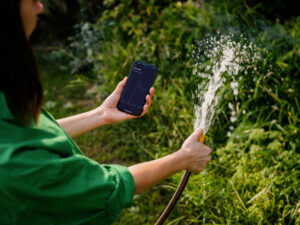
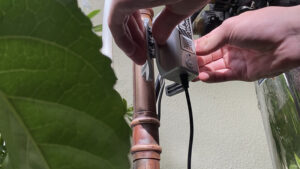
A bill tells you the total after the fact. Bluebot tells you where it went. It clamps onto any pipe, in any place you actually care about, the irrigation main, the valve box, the line under the sink, with no cutting and no plumber, reports flow to an app in real time, and its Dollarize™ feature shows usage in dollars rather than gallons, so an unexplained increase becomes a specific fixture or habit instead of a mystery.
Find the extra water usage and the bill follows. This guide covers every common cause of a higher water bill, how much water each one wastes, and the tests that name the culprit. Most are fixable in an afternoon. Hidden pipe leaks are the exception: they cost far more in damage than in water.
Key Facts at a Glance
About 10%: the savings on your water bill from fixing easily corrected leaks (EPA WaterSense, 2026). and seasonal factors can significantly increase consumption without obvious signs. This comprehensive guide identifies the most common causes of elevated water bills. It provides actionable solutions to help you regain control of your water costs while protecting your property from potential damage.
- More than 300 gallons a day: average household water use, about 70% of it indoors (EPA WaterSense, 2026).
- More than 9,300 gallons a year: wasted by the average household’s leaks (EPA Fix a Leak Week, 2026).
- Nearly 1 trillion gallons: wasted nationwide each year through household leaks (EPA WaterSense, 2026).
- Nearly 30%: share of indoor water use that goes to toilets, the largest indoor use (EPA WaterSense, 2026).
- More than 30%: share of household water used outdoors, up to 60% in dry regions (EPA WaterSense, 2026).

What Are the Most Common Causes of a High Water Bill?
Five things cause almost every high water bill: hidden leaks, a leaking toilet, thirsty appliances, seasonal outdoor watering, and utility billing errors. Leaks lead the list. They run around the clock, and nobody sees them.
A single running toilet can waste up to 200 gallons per day. A dripping faucet that drips once per second wastes more than 3,000 gallons a year. EPA notes that is enough water for more than 180 showers. Neither makes a puddle, so neither gets fixed.
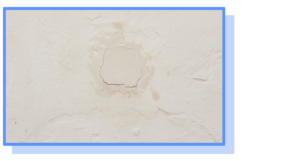
An undetected leak inside a wall or slab is the costliest kind. Water can run for months while it soaks framing and foundations. If your bill jumped but nothing looks wet, start with our high water bill but no visible leak walkthrough. Then check for an underground leak on the service line.
Water heaters are the quiet third cause. A weeping pressure relief valve or a rusted tank water heater drains straight to a floor drain. That is why water heater leaks show up as usage, not as visible water.
How Much Water Does Each Leak Actually Waste?
Volume tells you what to fix first. These are typical figures; your fixtures and local rates will vary.
| Leak or fixture | Typical waste | Why it matters |
|---|---|---|
| Leaky faucet with an occasional drip | 1 gallon per day | Small, but it never stops |
| Faucet dripping steadily | 35 gallons daily | A worn washer, fixed for a few dollars |
| Faucet dripping once per second | More than 3,000 gallons a year (EPA WaterSense, 2026) | Equal to more than 180 showers |
| Leaking showerhead (10 drips a minute) | More than 500 gallons a year (EPA WaterSense, 2026) | Usually just a worn thread seal |
| Minor toilet flapper leak | 25 gallons daily | Often completely silent |
| Silent toilet leak | 30-50 gallons daily | Only the dye test finds it |
| Continuously running toilet | Up to 200 gallons per day | Can add $50-$100 to a monthly bill |
| Neglected irrigation system | Up to 25,000 gallons a year (EPA WaterSense, 2026) | Overspray, broken heads, bad timing |
| Underground service line leak | Hundreds of gallons daily | Plus foundation and landscape damage |
How Can I Tell If I Have a Hidden Water Leak?
Your water meter tells the truth even when nothing looks wet. EPA’s Fix a Leak Week guidance is simple. Check the meter before and after a two-hour period when no water is used. If the reading moves at all, you probably have a leak. Give it 2-3 hours for a cleaner result, and switch off the icemaker and sprinkler timer first. Watch the leak indicator on the meter dial while you are there.
EPA offers a second screen using your own history. If a family of four uses more than 12,000 gallons in a cold month, there could be serious leaks. Winter suits this test: the sprinklers are off.
Then use your senses. Listen at walls and floors for running, dripping, or hissing. Look for stains, buckled flooring, mold, and musty smells near water heaters, sinks, and washer hookups. A silent leak leaves marks before it makes noise. Our step-by-step guide to finding a water leak and our guide to reading your water meter cover both checks. A Bluebot meter runs that same test continuously. It reads flow every minute and answers, “Is water moving right now?” without you standing at the dial.
What Toilet Problems Cause High Water Bills?
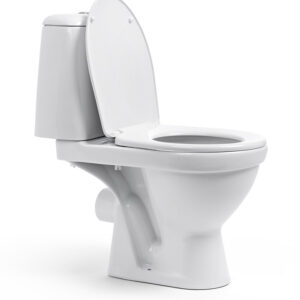
Toilet leaks rank among the most expensive and common causes of water waste in residential properties. A running toilet occurs when the flapper valve fails to seal properly, allowing water to flow from the tank into the bowl continuously. This seemingly minor issue can waste over 200 gallons daily, adding $50-$ 100 to your monthly water bill.
Toilet tank components wear out over time, requiring regular maintenance tasks such as chain adjustments, flapper replacements, and fill valve repairs. A simple food coloring test reveals toilet leaks: add several drops of food coloring to the toilet tank, wait 15 minutes without flushing, and check if colored water appears in the bowl.
Leaking toilet base seals create additional problems beyond high bills, potentially causing floor damage and requiring immediate attention. Signs include water pooling around the toilet base, loose toilet movement, or persistent sewer odors near the fixture.
What Toilet Problems Cause High Water Bills?
Toilets are the largest indoor water use in the home (nearly 30%, EPA says). So a toilet fault moves your bill more than any other fixture.
Most toilet leaks are one part: the flapper. The rubber hardens, the flapper valve stops sealing, and toilet tank water slips into the bowl nonstop. That is the leak that can add $50-$100 to a monthly water bill.
Confirm it with the dye test. Put a few drops of food coloring in the tank. Wait 15 minutes without flushing, then check the bowl. EPA says color in the bowl after 10 minutes means you have a leak. A worn flapper, a fill valve, and a chain are all inexpensive parts.
Replacing the toilet can pay, too. Older toilets use as much as 6 gallons per flush. Today’s federal standard is 1.6 gallons, and WaterSense models use 1.28 gallons or less. EPA’s WaterSense toilet data (2026) estimates a family can save nearly 13,000 gallons and more than $170 a year by swapping old toilets out.
A leaking base seal is different. Pooling water, a rocking toilet, or a sewer smell needs attention before the subfloor goes.
Why Is My Water Bill Higher in Summer?
Outdoor water use is the biggest seasonal swing there is. EPA puts it at more than 30% of household water use, and up to 60 percent in dry regions. Most homes see a 20-50% jump in water usage once the sprinklers start.
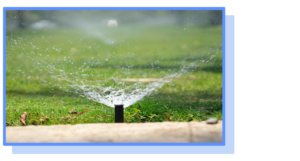
Automatic irrigation is the main driver. A sprinkler system can use over 12,000 gallons monthly on an average lawn. EPA warns that a system nobody maintains can waste up to 25,000 gallons a year. As much as half of all outdoor water is lost to wind, evaporation, and runoff. Walk the zones every spring: a broken sprinkler head or drifting spray is an irrigation leak you can see. See our guide to irrigation system leaks. Bluebot clamps onto the irrigation main or straight into the valve box, so the zone that fails announces itself the day it breaks, not on next month’s bill.
Pools add to it. Filling one takes 15,000-25,000 gallons, depending on size. Top-offs, backwashing, and evaporation continue all season. A pool that needs water daily may have a pool leak, not evaporation.
Winter works the other way. Bills normally fall once watering stops. So a winter water bill spike usually means an indoor leak, not a change in habits.
Which Appliances Use the Most Water?
Washing machines are the heaviest routine indoor draw. Older clothes washers run about 40 gallons per load. Older top-loaders use roughly 50% more water than a modern high-efficiency washer. ENERGY STAR (2026) full-size models use about 14 gallons per load, against about 20 for a standard machine. Replacing an aging washer can save a family 7,000 gallons or more each year, roughly $60 to $100 off the combined water and sewer bill at typical US rates. Our breakdown of how much water a washing machine uses has the model-by-model numbers.
Dishwashers are the opposite story. A machine uses about 4-6 gallons per cycle, and ENERGY STAR models run near 3.2 gallons. Washing the same load by hand can take 8-27 gallons. Pre-rinsing doubles a dishwasher’s water consumption, and half-full wash cycles multiply it. See how much water a dishwasher uses for the full comparison.
One 2025 change matters at the store. In May 2025 the U.S. Department of Energy proposed rescinding the water-efficiency rules it had set for home clothes washers and dishwashers. New-model water consumption may not keep falling. Check the WaterSense or ENERGY STAR label before you buy.
Could My Water Meter or My Bill Be Wrong?
Sometimes the water is not the problem. Meters lose accuracy with age and grit. An estimated read replaces a real one. Rate tiers change mid-year, and a meter misread gets typed straight onto your statement. Any of those can produce a water-and-sewer bill that matches no extra use at all.
Ask your utility to test the meter. Many test free after an unexplained jump. Document your meter readings, dates, and recent plumbing work first. Independent flow data is what settles the argument. Bluebot uncovered a $13,000 billing error after nearly six years of overbilling. Our frequently asked questions about water meters covers accuracy and how monitoring backs up a utility meter.
What Role Does Water Pressure Play in a High Bill?
Water pressure sets how much water leaves every open fixture. Normal home static pressure is 40-60 PSI. High pressure means you pay for water you never asked for, and fixtures wear out early.
Plumbing code draws the line at 80 PSI. The 2024 International Residential Code and the Uniform Plumbing Code both require a pressure-reducing valve above it. Most valves ship set between 45 and 55 PSI.
Low pressure matters too. A drop across the whole house often means a leaking pipe between the meter and the home. That is the same leak your elevated water bill is already paying for. A Bluebot meter clamped between the main and the house catches that steady background flow before it becomes next month’s bill.
How Do Multi-Unit Properties Handle Water Billing?
A master meter hides everything. When one bill covers every unit, nobody sees a running toilet until the property pays for it. Submetering assigns real usage to real units, and that changes behavior. An EPA-funded study for the National Multi Housing Council (2004) found submetered properties used about 15.3% less water than properties that bundle water into rent. Apartment water submetering also lets a manager spot the one unit driving a spike.
What a Bluebot Meter Shows You That a Monthly Bill Cannot
A water bill is a report card that arrives 30 days late. Bluebot reads flow all day instead. It catches an odd pattern (a fixture running at 3 a.m., a line that never stops) and sends a leak alert. Catching it in the first hour is what turns a claim into a repair. Historical data does the rest. It shows your usage pattern, separates seasonal irrigation from a real fault, and proves whether a fix worked.
That is the gap between minutes and a monthly bill. The 50-W (Bluebot Mini) is built for homes and installs without cutting pipe. The full range is in our water monitoring shop.
When Should You Call a Professional Plumber?
Call a licensed plumber when the meter confirms a leak you cannot find, when pressure is low house-wide, or when you suspect a sewer line problem. Water heater work involving gas, wiring, or the relief valve belongs to a pro. So do burst pipes and any leak damaging the structure. Plumbers carry thermal imaging and acoustic leak detection gear, so they find a concealed leak without opening five walls.
How Can I Lower My Water Bill Starting This Month?
Fix leaks first. EPA estimates that correcting easy household leaks saves about 10 percent on your water bill. Replace worn flappers, worn washers, and drifting sprinkler heads. Then reset irrigation run times for the season.
Upgrade second, where the payback is real. A WaterSense showerhead saves about 2,700 gallons a year, roughly $25 to $40 on the annual bill, and it cuts the energy cost of heating that water on top. WaterSense toilets cut water consumption. An ENERGY STAR washer is worth it at end of life.
Then monitor, so the next leak announces itself instead of arriving as a bill. A Bluebot meter is what does the monitoring. Clamp it on, and the next leak shows up in the app in dollars, not on a bill 30 days later. Our guide to saving money on your water bill has the rest of the quick wins.
Frequently Asked Questions
Why is my water bill so high all of a sudden?
A sudden jump almost always means a new leak, not a new habit. A running toilet or an underground leak can start overnight and waste hundreds of gallons a day without a visible drip. Check your water meter over a two-hour period with every fixture off; if the reading moves, you have a leak.
How much does a running toilet add to a water bill?
A continuously running toilet can waste up to 200 gallons per day, which commonly adds $50-$100 to a monthly water bill depending on local rates. Even a minor flapper leak wastes about 25 gallons daily. A worn flapper costs a few dollars, so this is usually the least expensive fix with the biggest payback.
Can I have a high water bill with no visible leak?
Yes, and it is common. Underground service line leaks, slab leaks, silent toilet leaks, and a weeping water heater relief valve all drain to soil or a floor drain, so nothing ever looks wet. Silent toilet leaks alone waste 30-50 gallons daily. The meter test and the food-coloring dye test find what your eyes cannot.
How do I check my water meter for a leak?
Turn off every fixture and appliance that uses water, including the icemaker and sprinkler timer. Record the meter reading, wait 2 to 3 hours without using water, then read it again. EPA’s Fix a Leak Week guidance says any movement over that period means you probably have a leak.
Why is my water bill higher in the summer?
Outdoor watering is the reason. EPA puts outdoor use at more than 30 percent of household water use, and up to 60 percent in dry regions, and most homes see a 20-50% jump once irrigation starts. An automatic sprinkler system can use over 12,000 gallons monthly, and filling a pool takes 15,000-25,000 gallons.
Can my water meter be wrong?
It can, though modern meters are accurate. Meters drift with age and debris, and estimated reads, mid-year rate changes, and typing errors also produce wrong bills. Ask your utility to test the meter, since many test free after an unexplained increase, and document your own readings and any recent plumbing work first.
How much water should my household actually use?
EPA says the average American family uses more than 300 gallons of water per day at home, with roughly 70 percent used indoors. Use is not the same as waste, though: EPA also estimates the average household leaks more than 9,300 gallons a year. A family of four using over 12,000 gallons in a winter month may have serious leaks.
How do I lower a high water bill quickly?
Fix leaks first. EPA estimates that correcting easily fixed household leaks saves homeowners about 10 percent on their water bills, and flappers, faucet washers, and broken sprinkler heads are inexpensive parts. After that, upgrade to WaterSense fixtures and add continuous monitoring so the next leak is caught in hours, not on a bill.